
Table of Contents
Key Takeaways:
- Full baths add more value, while half baths deliver a better ROI.
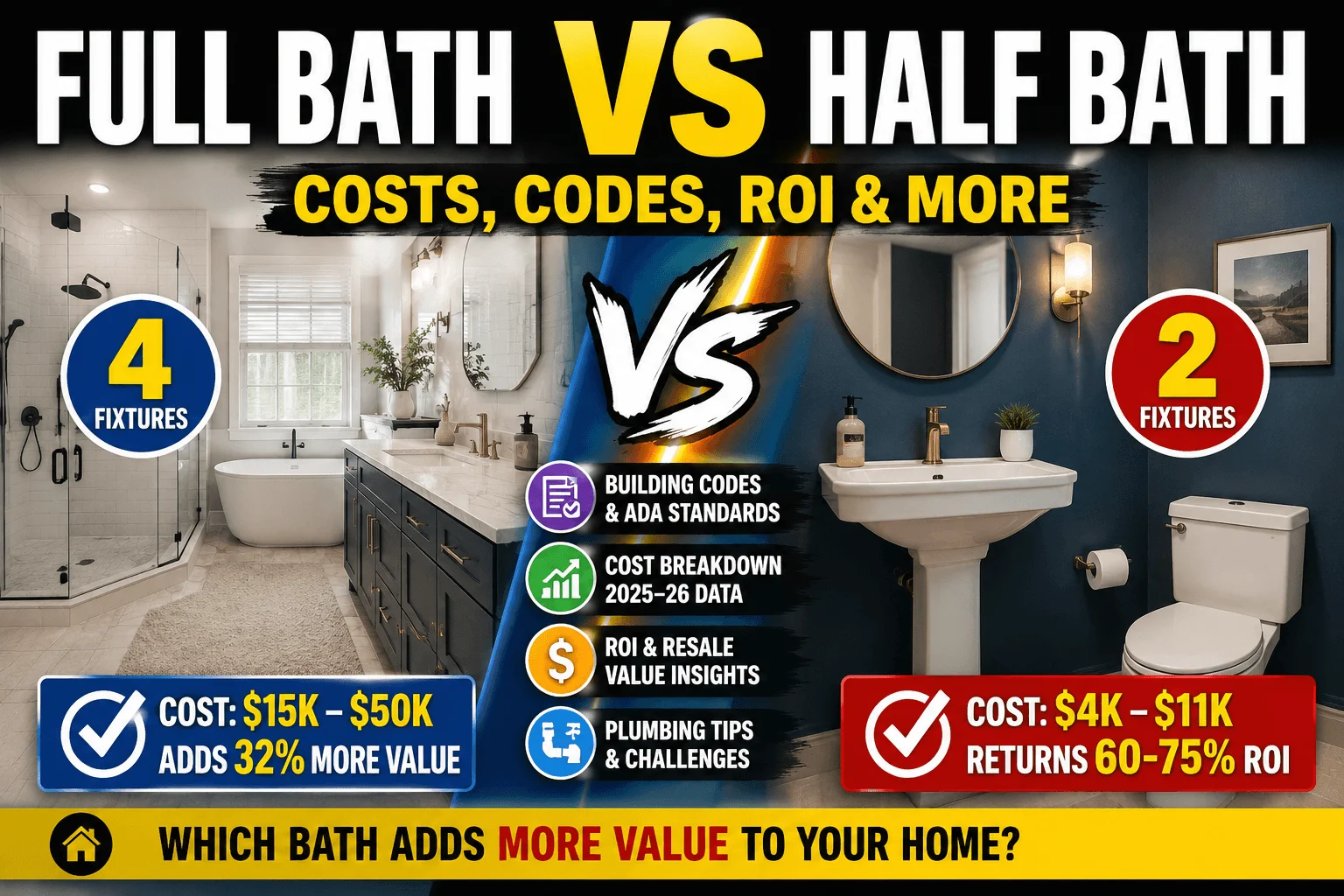
- A full bath costs $15K–$50K; a half bath costs $4K–$11K.
- Building codes, permits, and plumbing significantly impact installation costs.
- Choose based on your home’s existing bathroom count, budget, and resale goals.
The full bath vs half bath debate matters for remodeling budgets, resale value, and code compliance. A full bath has four fixtures (toilet, sink, tub, shower); a half bath has two (toilet and sink).
Full baths cost $15K–$50K to add, half baths run $4K–$11K, and each type carries a distinct ROI, plumbing demand, and accessibility profile.
Planning a bathroom addition? The full bath vs half bath decision is one of the most consequential choices in home improvement.
Get it right and you’ll boost your home’s value, functionality, and marketability. Get it wrong and you’ll overspend for features buyers won’t reward.
This guide covers everything competitors miss — building codes, ADA requirements, real cost breakdowns, and MLS listing rules.
What Are the Four Bathroom Types?
The full bath vs half bath classification uses a simple fixture-counting system.
| Bath Type | Toilet | Sink | Shower | Tub | Fixtures |
|---|---|---|---|---|---|
| Full bath | ✓ | ✓ | ✓ | ✓ | 4 |
| Three-quarter bath | ✓ | ✓ | ✓ | ✗ | 3 |
| Half bath | ✓ | ✓ | ✗ | ✗ | 2 |
| Quarter bath | ✓ | ✗ | ✗ | ✗ | 1 |
The half bath (also called a powder room or guest bath) is the most popular addition for main-floor living areas.
A full bath typically anchors a primary or secondary bedroom suite.
What Size Do You Need?
- Half bath: 16–20 sq ft minimum; as small as 11 sq ft in tight spaces
- Three-quarter bath: 32–45 sq ft typical
- Full bath: 40–60+ sq ft; master suites often run 100+ sq ft
The full bath vs half bath size gap is significant for floor-plan planning and structural costs.
Code Requirements: IRC and ADA Standards
IRC Minimums (2021)
Under IRC Section R307, every bathroom must meet minimum fixture clearances:
- 15″ from toilet centerline to any side wall or obstacle
- 21″ clear in front of toilet
- 30″ × 30″ minimum shower compartment
- Mechanical exhaust fan (50 CFM) or 3 sq ft operable window
- GFCI outlets required within 6 feet of any water source
Permits are required whenever plumbing or electrical work changes — no exceptions.
ADA Accessibility Standards
Accessibility transforms the full bath vs half bath calculus for aging-in-place design:
- 60″ wheelchair turning radius (clear floor space)
- 36″ minimum door width
- Grab bars: side wall minimum 42″ long, rear wall 36″ long, mounted 33–36″ above floor
- Lever handles (not round knobs) on all fixtures
- Comfort-height toilet: 17–19″ seat height
- Curbless shower preferred for full bath accessibility
Cost Breakdown by Bathroom Type (2025–26 Data)
| Bath Type | Cost Range | Key Cost Drivers |
|---|---|---|
| Quarter bath | $2K–$5K | Single fixture, minimal plumbing |
| Half bath | $4K–$11K | Toilet, sink, drywall, ventilation |
| Three-quarter bath | $5K–$12K | Shower pan, tile, glass enclosure |
| Full bath | $15K–$50K | Tub, shower, all finishes, permits |
The full bath vs half bath cost gap can exceed $40,000 at the premium end. Basement installations add $3K–$8K for ejector systems.
Hidden costs to budget: permits ($500–$2,500), structural reinforcement, and waterproofing.
ROI and Resale Value: What the Data Says
According to the National Association of Home Builders’ November 2025 American Housing Survey, a full bathroom increases home value by approximately 32%, while a half bathroom adds an estimated 15%.
When measured by cost recouped at resale, the full bath vs half bath comparison flips:
- Half bath: recoups 60–75% of project cost
- Full bath: recoups 47–60% of project cost
The half bath wins on percentage ROI because the lower price point makes the return ratio stronger.
The full bath vs half bath trade-off for resale depends on your home’s current count — adding a first half bath to a one-bathroom home delivers the biggest jump.
Plumbing and Installation Challenges
New bathroom additions involve real plumbing decisions:
- Macerating toilets: grind waste and pump it horizontally or upward — ideal for basement half baths without breaking concrete
- Sewage ejectors: handle below-grade drain lines; add $600–$2,000 to project cost
- Venting: new toilets need a 3″ vented drain; wet venting and air admittance valves (AAVs) are common solutions
- Stack tie-in: connecting to the existing waste stack is cheaper than running new drain lines
The full bath vs half bath installation cost difference often comes down to whether you’re adding a tub or shower — both require floor penetrations, waterproofing, and often structural support.
How MLS Listings Count Bathrooms
Real estate listings use a decimal system:
- “2.5 baths” = 2 full baths + 1 half bath
- “1.75 baths” = 1 full bath + 1 three-quarter bath
- Two half baths ≠ one full bath in MLS — each counts separately
The full bath vs half bath distinction appears directly in listing search filters on Redfin, Zillow, and Realtor.com. Miscounting can affect buyer search visibility.
FAQ
What is the difference between a full bath vs half bath?
A full bath contains four fixtures: a toilet, sink, bathtub, and shower. A half bath (powder room) contains only two: a toilet and a sink. The full bath vs half bath distinction determines how the room is counted in real estate listings and how much it costs to build.
Does a full bath add more value than a half bath?
A full bath adds approximately 32% to home value, according to NAHB’s 2025 American Housing Survey. A half bath adds about 15%. However, on a cost-recouped basis, half baths (60–75%) outperform full baths (47–60%) because they cost far less to build.
How much does it cost to add a half bath?
Adding a half bath typically costs $4,000–$11,000, depending on plumbing access, location, and finishes. Basement additions requiring ejector pumps or macerating toilets cost more.
What does “2.5 baths” mean in a real estate listing?
“2.5 baths” means 2 full baths + 1 half bath. In MLS terminology, each bathroom type is counted separately. Two half baths do not combine into one full bath in listing count.
Do I need a permit to add a half bath?
Yes, in most jurisdictions. Any project that involves new plumbing (drain lines, supply lines) or electrical work (GFCI outlets, exhaust fan) requires a permit under local building codes based on the IRC.


Join The Discussion